


Central Slovakia Region
Central Slovakia, a region that lies in the middle/in the heart of everything – Slovakia, Europe, and among mountains and basins – is not just a territory, it is a matter of the heart.
Beyond the mountains, beyond the valleys, history was set in motion there in the Central Slovakia region. Castles and chateaus, uprisings and revolts have woven through this land just like its precious ores. The heart of Slovakia, which once beat fast and sounded the alarm, also knows how to soothe. Healing springs, spas and mineral waters give this region strength, and thanks to the mountains, a weary person comes alive here again. Central Slovakia is made up of places that are like the heart, from which blood flows to the whole body. Whether from the east or the west, it is simply relatively close from everywhere, and for many of us it still is, and will remain, a matter of the heart.
Discover the region’s TOP attractions with us
Skiing, monuments, culture, mountains, caves and much more can be experienced and discovered in the heart of Slovakia.
1. PARK SNOW Donovaly
At Donovaly, you can easily pass not only from one national park to another, but also across the border that once separated us from childhood, games and fun. Along the ski slopes, cross-country trails, hiking and cycling routes, you can easily soar into the world of active relaxation. And you do not have to be a paraglider pilot; adventure awaits on the bobsleigh track and in the ropes course as well. Children in particular can let loose on the trampolines and make their first ski turns in the Funpark – the largest skiing instruction area in Central Europe. In addition, a host of attractions and events are prepared for them all year round, for example in the fairy-tale village of Habakuky, the children’s town of Donovalkovo, or Myšiačik’s Water World.

© PARK SNOW Donovaly
2. Špania Dolina
Much water has already flowed from beneath Prašivá through the oldest and longest mining aqueduct in Slovakia to the mines of the Thurzo-Fugger company near Špania Dolina. The importance of this mountain village is presented by a mining educational trail, an exhibition in the former mining bell tower, and the Copper Museum, dedicated to the copper that was once mined here and even made its way onto the ship of the discoverer of America. The famous Špania Dolina lace is still made here today. The romantic setting with monuments of folk architecture and a panorama with its indispensable early Gothic little church invites walks and the discovery of the history of this important site.

© Gabriel Antal
3. City Center of Banská Bystrica
Thanks to its mineral wealth, copper-rich Banská Bystrica ranked among the three most important mining towns of central Slovakia. Local mining reached its greatest boom in the 15th-16th centuries during the time of the Thurzo-Fugger company, at one time one of the largest copper producers in the world.
The town center, with its barbican, churches, town hall, bastions and remnants of the city fortifications, easily transports visitors to this glorious past. It is dominated by the main square lined with precious historic buildings. This part pulses with life especially during the summer days; it is a meeting place and the venue for events that bring the whole city together.

© Veverka / OOCR Stredné Slovensko
4. Museum of the Slovak National Uprising
Banská Bystrica entered modern history mainly through the proclamation of the Slovak National Uprising – the second largest nationwide uprising against fascism during the Second World War. These events are commemorated by the museum in the SNP Memorial. The architecturally striking building full of symbols is in itself an unmistakable landmark. The museum’s exhibitions bring chilling details from the history of fascist dictatorships, the Holocaust, and anti-fascist resistance in Slovakia and around the world. The atmosphere of the battles during the Uprising is also enhanced by the open-air display of heavy combat equipment directly on the museum grounds.

© OOCR Stredné Slovensko
5. Pustý Castle
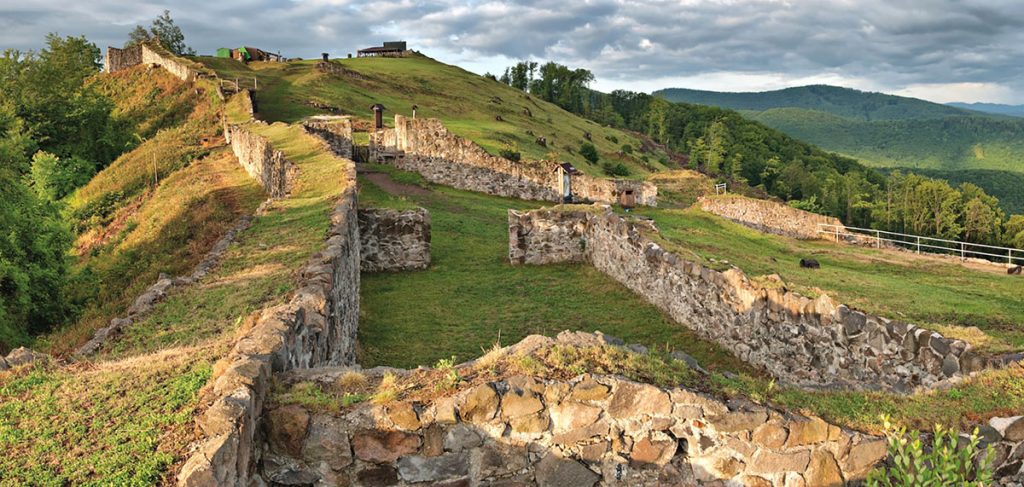
The decline of the old castle above Zvolen, once among the largest in Slovakia and Central Europe, began with the construction of a new royal residence directly in the town. After a fire in the 15th century during its capture by the troops of John Hunyadi, the castle began to fulfil the meaning of the name by which we know it today. Thanks to archaeological research, however, Pustý Castle is gradually emerging from scrub and forest and revealing its ancient secrets and treasures. Preserved here, for example, are evidence of settlement of this site as early as the Bronze Age, as well as the remains of a square residential tower (donjon) – one of the largest medieval residential buildings in Central Europe. The preserved complex of ruins is open to tourists and offers magnificent views of the Zvolen Basin and the surrounding mountains.

© OOCR Stredné Slovensko
6. Slovenská Ľupča Castle
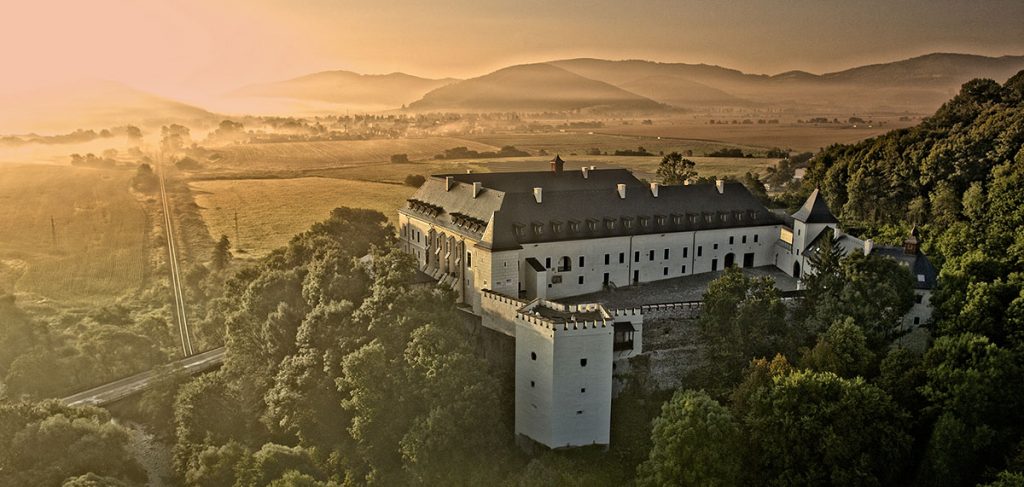
Ľupča Castle from the 13th century was once given as a dowry to Hungarian queens, and even the rulers themselves used to hunt through the surrounding forests. Under the more than 700-year-old linden tree – one of the oldest trees in Slovakia – King Matthias Corvinus is said to have once liked to sit, and he even gave the tree its name. The castle passed from hand to hand, experienced upheavals during the noble uprisings, served the army, as a prison and a reformatory, orphans grew up here, and it witnessed monastic life. Its destruction was helped to be averted by extensive reconstruction carried out by its current owner, Železiarne Podbrezová.

© OOCR Stredné Slovensko
7. Wooden Articular Church of Hronsek
It was like a fairy tale – an almost impossible task. During the period of strong Catholicization, Lutherans were permitted to build their own churches, but they were not allowed to contain even a single metal part, had to be built without a tower, and had to be completed within one year. This is how eight wooden churches of the Carpathian Arc, inscribed on the UNESCO World Heritage List, came into being. One of them is located in central Slovakia in the village of Hronsek near Banská Bystrica. It was here that the poet Andrej Sládkovič and his beloved Júlia Sekovičová sealed their marriage vows.

© OOCR Stredné Slovensko
8. Great Fatra Dark Sky Park
If you want to admire a sky strewn with stars, visit the Dark Sky Park in Veľká Fatra after sunset. Here, protected from light smog, you will discover stars that usually elude the human eye. It is a punishment for not respecting the natural law of darkness, but the ridge of Veľká Fatra submits to it once again. The reward for all light-innocent astrotourists is then a magnificent starry performance.

© OOCR Stredné Slovensko





Get information
Information Centre Banská Bystrica
Námestie SNP 1
974 01 Banská Bystrica
ic@banskabystrica.sk
+421 (0)48/41 55 085
Information Centre Zvolen
Námestie SNP 21/31
960 01 Zvolen
ic@zvolen.sk
+421 (0)45/53 03 405
Information Centre Donovaly
Nám. Sv. A. Paduánskeho 136
976 39 Donovaly
info@infodonovaly.sk
+421 (0)48/41 99 900