

29 Sep Lučenec — Discovering Traces of History Right in the City
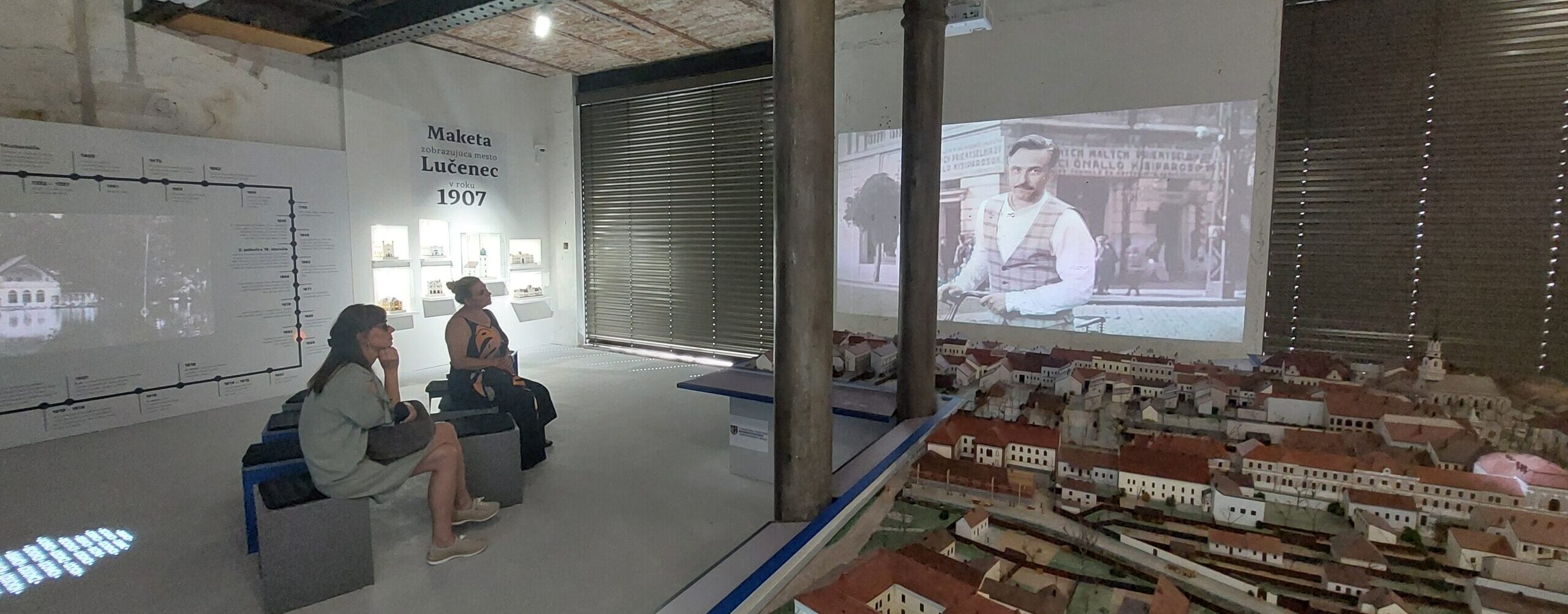
Lučenec with its absolutely perfect City Museum It surprised us with a superbly curated exhibition in a former fire station, where we learned about the city’s history through an interactive model and stories from architects and enamel artists. We were fascinated by how the individual exhibits connected to real-life locations—what we saw in the museum, we later sought out in the streets. We discovered functionalist buildings, a house connected to an enamel workshop, and the unique atmosphere of the Franz restaurant, where we enjoyed excellent meals every evening. The experience was enhanced by the contrast with the modern architecture of the high-rise buildings in the city center. This trip was a wonderful blend of history, exploration, and local atmosphere.
Where: Lučenec
District: Lučenec
Time/Duration: Set aside the whole day.
A fascinating exhibition in a former fire station
Our visit began at the former fire station, which is now one of the most modern sections of the Lučenec City Museum. There, we were captivated by a large model of the city dating from 1907, amendedby by ashortclips and interactiveíexterior panels. Pr íStories about the architect Oskar To the Winklers and dalwideron personalities náI literally started talking…údili chuť set outť out and hľadať in the streets, No.We are about toýWe saw it in the model. T áthat thistimet exhibittionnás simply drew me in.
Searching for Functionalist Buildings Right on the Streets
After touring the museum, we headed to downtown Lučenec to look for the functionalist buildings featured in the model and the exhibition. It was a fun urban scavenger hunt—we compared historical records with reality and found several buildings that are still standing and truly resemble those in Winkler’s work.

A fascinating exhibition on enamel workshops and excellent dinners at Franz
The section dedicated to the Sternlicht and Rakottyay enamelware factories was also a great experience. These were once huge factories that produced enamelware and exported it throughout Europe. Today, however, the enamel factories are no longer in operation and have closed down, mainly due to economic changes and the relocation of production.
While wandering the streets of Lučenec, we also discovered a beautiful, though abandoned and dilapidated, Art Nouveau house. We learned that it had been built by a high-ranking manager at one of the enamel factories—specifically, Vály, who was one of the executives at the Rakottyayov company. It was an interesting connection to what we had seen at the museum.
We ended every evening at Franz Restaurant (also known as the Franz Brewery), which is located in one of the buildings of the former enamel factory. Fantastic food, generous portions, and the historic setting created a wonderful atmosphere—it was simply top-notch, and we’re already looking forward to going back there.

High-Rise Buildings in Complex 1 ESO – modernity in contrast to the historicóhistory
During our stay, we were also intrigued by the tall buildings in the city center, often referred to as Complex 1 ESO. These high-rise buildings look monumental—the tallest of them reportedly has 22 stories and towers over the city as if from another world. We got the feeling that the city’s architecture had gone a bit “over the top” here. Today, these spaces don’t seem to be put to much use, yet they remain a striking part of Lučenec’s skyline. Their presence stands in stark contrast to what we experienced at the museum—among historic buildings, bourgeois interiors, and memories of a time when Lučenec thrived primarily on its crafts and industry.
In addition to these, other “architectural gems” from the 1990s also contribute to the city’s skyline. The high-rise buildings of Complex 1 However, ESO likely had ambitions other than to be largely abandoned today—or at least that is the impression it gives. This complex was built between 2004 and 2006; the investors were V.T.C. and Allianz – Slovenská poisťovňa, and the total cost amounted to nearly 400 million Slovak korunas.
The architectural design is inspired by a silicon crystal, giving the buildings a modern and unique look. Originally, these buildings were planned as an administrative and commercial center for eight manufacturing plants in the non-metallic mineral processing sector, which were scheduled to begin operations between 2006 and 2008. Today, the tallest building houses approximately 20 companies, including an insurance company, and part of the space is used for residential purposes.
High-rise buildings are a prominent feature of Lučenec’s city skyline and elicit mixed reactions among residents. Some view them as a symbol of progress and modernization, while others consider them architecturally inappropriate in the historic setting.

Why We Enjoyed the Visit
Everything came together perfectly—the exhibition featuring a model of the city, exploring the buildings on-site, stories about the enamel factory, and the functionally intriguing media installations. And then there were the evenings spent enjoying excellent cuisine in a historic building—simply an experience worth repeating.


Latest Posts
-

In the Footsteps of the Outlaw Jakub Surovec
Join us on a journey through the land of outlaws—the mysterious Devil's Valley. ...
0 Likes -
-

Lučenec — Discovering Traces of History Right in the City
This trip was a wonderful blend of history, exploration, and local atmosphere. ...
0 Likes